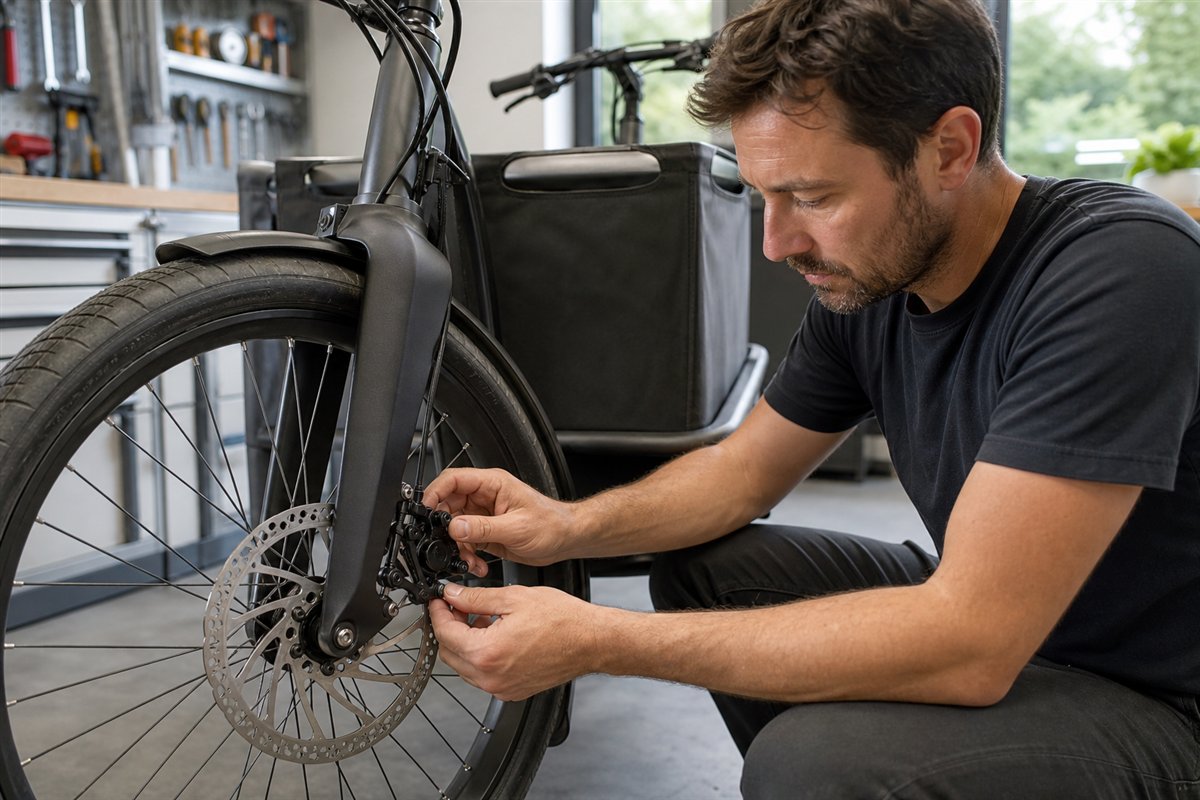
Check e-bike brakes before every ride and inspect pad wear frequently. The bicycle’s weight, motor-assisted speed, hills, cargo, and riding style can increase heat and wear. Do not ride with weak braking, a leaking system, metal contact, damaged parts, or a lever that reaches the handlebar.
Before riding
Apply each brake separately while stationary. Confirm firm lever feel, secure wheels, and predictable holding force. Look for obvious hose or cable damage and ensure warning lights or displays do not obstruct controls.
Inspect wear as a system
Pad thickness, rotor or rim condition, caliper alignment, tire grip, and wheel security work together. Replace components at the maker’s limits and use compatible parts.
Manage heat and load
Long descents and heavy cargo can create significant brake heat. Use the technique and equipment guidance from the bicycle and brake manufacturers. Allow hot components to cool before touching them.
Hydraulic work, rotor damage, recurring contamination, and unclear performance changes belong with a qualified e-bike mechanic. Review the brake inspection guide.
Frequently asked questions
How often should e-bike brakes be serviced?
Check e-bike brake function before every ride and inspect pads more often than on an analog bike, because the extra weight and speed of an e-bike wears pads faster. Many riders check pads monthly and service the brakes at least twice a year.
Do e-bikes need special brake maintenance?
E-bikes use the same disc brake principles but demand closer attention. Heavier bikes, higher speeds, and cargo loads mean more heat and faster pad wear, so pad thickness, rotor condition, and hydraulic feel should be checked more frequently.
Continue the topic
More e-bike care guides
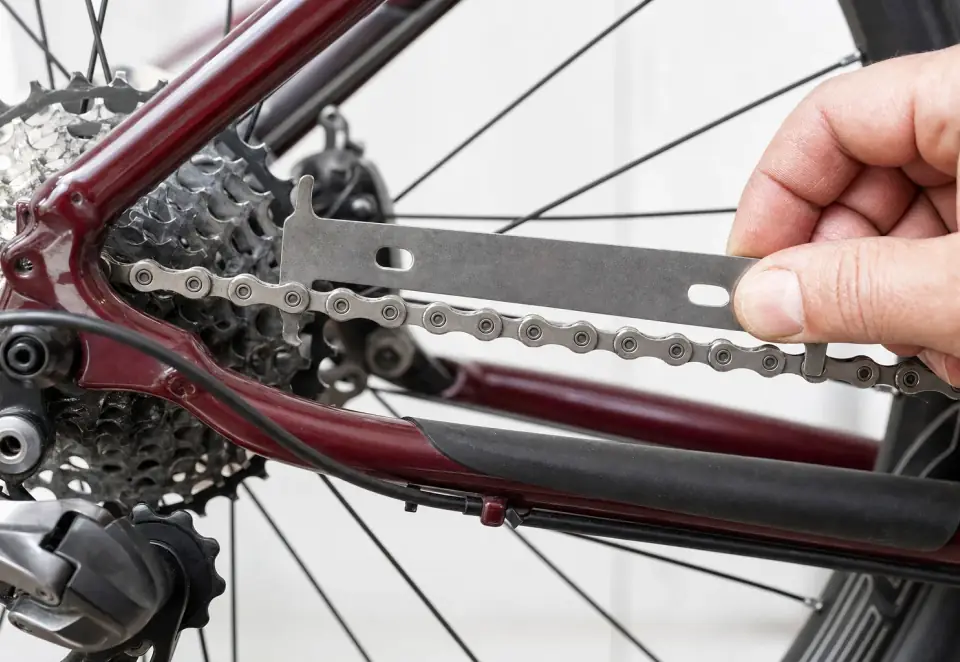 E-Bike Chain Maintenance: Cleaning, Wear, and Load
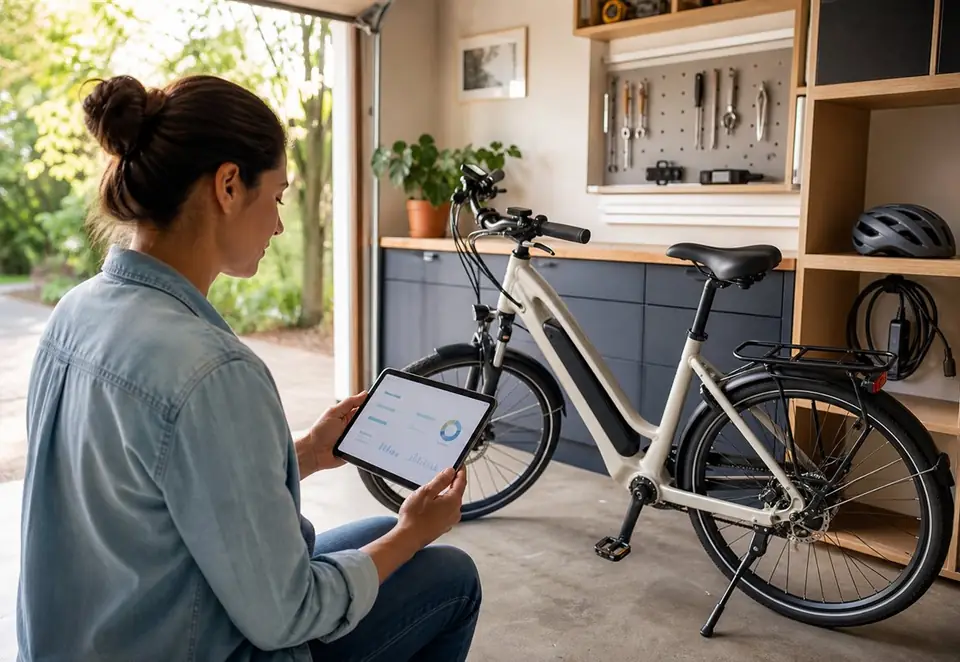 E-Bike Maintenance Schedule: A Practical Plan
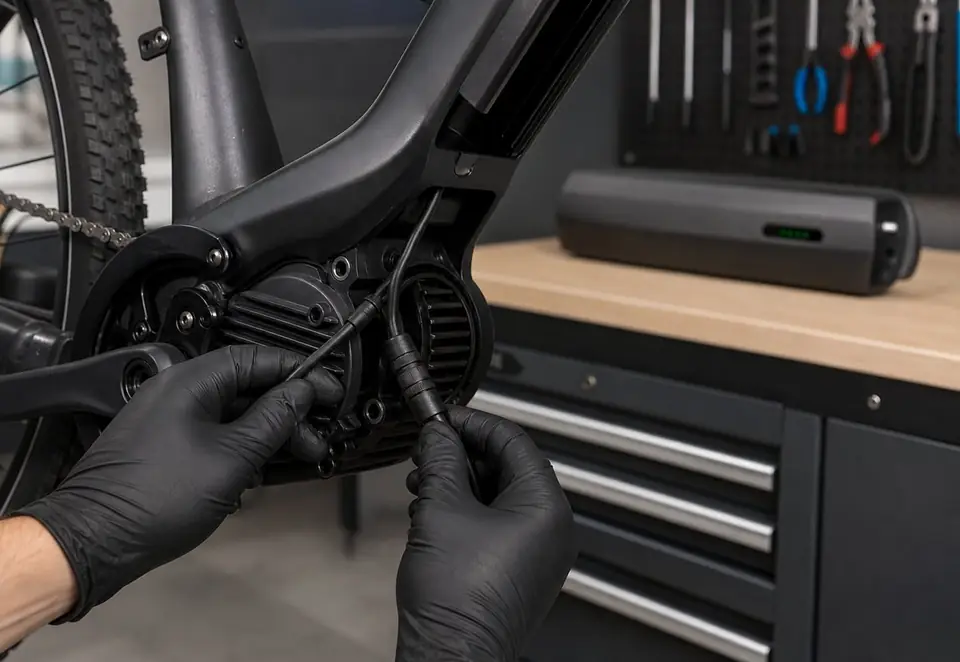 E-Bike Maintenance: What Is Different?
Watch the technique
Everything You Need To Know About E-Bike Maintenance
Video by Electric Mountain Bike Network · Watch on YouTube